- Welcome to the Doomstead.

United for sustainability Climate Crisis Club 
Recent posts
#21
Tech is always to the rescue / OpenAI's Undeniable Resurgence...
Last post by RE - Oct 03, 2026, 09:25 PM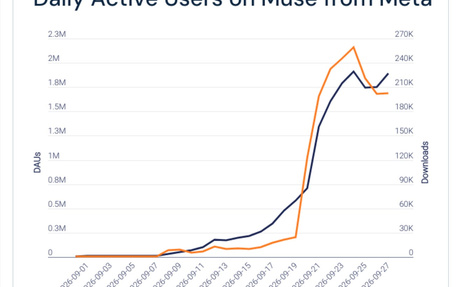
OpenAI's Undeniable Resurgence and the Coming Liftoff of Personal AI Agents
I recommend watching this Dots demo video by an OpenAI employee. Dots can go through your email, calendar, Slack messages and documents and suggest work priorities. You can also call your Dot to book travel, look at hotel options and ask about traffic patterns.
I'm probably underestimating the gullibility of the average J6P Konsumer, but this Hard Sell of all the GREAT things having your own Personal AI Agent will do for you seems to me like something I neither need or even WANT.
Do I want an Agent to book my Travel Plans? I never used travel agents even when they were people. Do I want an Agent to respond to my emails and do my online banking? I'm supposed to TRUST one of these cyber secretaries with my Login info and Passwords?
What % of the population leads such a bizzy Calendar-Filling life that they need a Personal Assisstant, either the traditional kind that you can also fuck on your bizness trips or the new AI kind that just talks dirty to you? I think the folks designing these Aps for AI confuse things THEY want to go with their 7 figure salary and what your average J6P who these days can afford maybe 1 vacation every 5 years wants.
If this is what AI enthusiasts think will bring in the ROI to justify a $10T buildout, I think they will be sadly disappointed.
RE
#22
Tech is always to the rescue / The big AI revolution
Last post by RE - Oct 03, 2026, 01:35 PMTDoS Family Photo. 😀

RE
RE
#23
Tech is always to the rescue / The big AI revolution
Last post by K-Dog - Oct 03, 2026, 12:40 PMQuoteclassic Appalalchian 'holler,Exactly what a bot would do, fall back on the script. Less than 1000 words can contain 'everything you have 'revealed' about yourself from day one.
And that is being generous, I take it back 500 words.
#24
Tech is always to the rescue / The big AI revolution
Last post by TDoS - Oct 03, 2026, 12:11 PMQuote from: RE on Oct 03, 2026, 10:29 AMQuote from: TDoS on Oct 03, 2026, 07:47 AMI have no evil intent.
It's not Intentional, it's Inbred.
RE
Well, while I admit to having been raised in the midst of the classic Appalalchian 'holler, I know who both parents were, and they weren't related. So no, no inbreeding that I know of going back at least 3 generations. And by then those folks were mixed eastern european and Irish, so unlikely any inbreeding that far back either.
And again, assigning "evil intent" to someone who just studies, postulates, does the science and builds econometric models that benefitted by being right in the exact moment when the peak oilers were at their apex...hey....it is only fair I can kick back and coast on my well earned professional reputation at this point.
#25
Tech is always to the rescue / The big AI revolution
Last post by TDoS - Oct 03, 2026, 12:04 PMQuote from: K-Dog on Oct 03, 2026, 09:05 AMTHIS PAGE, look at the top of this pay and refresh a few times. There are only a few banners in rotation, 4 or 5. And you have watched this page load at least 100 times.
GOT IT!!! Well there you have it. I hit one of these forum pages and go right to the text. Never even noticed that Surly reference at all.
I HAVE watched the page load more than 100 times....I just don't pay any attention to the top. Why would I? My intent is simple...."are there any new posts AFTER my last one". As there are only the 3 of us kicking around, anything other than that is irrelevant. I've got reddit for full-scale wide band doom of all kinds, including Surly's aggregation.
Quote from: K_DogSo it appears you are a robot who just busted yourself. No tokens for you.
Good to know! You are not real.
Then I am NOT the D. Jarvie that RE wants to pretend I am? QUICK! SOMEONE TELL ALL THE SCIENCE RAGS THEY'VE BEEN SPOOFED BY A BOT! DECADES AGO EVEN!
#26
Tech is always to the rescue / Anthropic’s $2trn IPO faces a ...
Last post by RE - Oct 03, 2026, 11:31 AM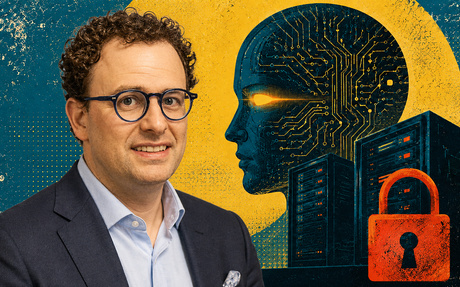
‘AI Is The Devil’: This Dario Amodei's Spoof Has Anthropic CEO Asking To Be Stopped
Amid rising public anxiety about artificial intelligence, Anthropic’s CEO was satirized on Saturday Night Live as a conflicted executive whose character revealed hidden fears that developers understand the dangers of their work yet proceed regardless. The sketch exposed a chilling disconnect between corporate reassurances and the grim reality that AI may ultimately serve as a tool for weaponization.

Anthropic’s $2 trillion IPO dream rests on staggering revenue bet
Anthropic’s potential $2 trillion IPO hinges on projecting nearly $200 billion in 2028 revenue, a dramatic leap from its current run rate. Investors are betting that sustained growth, diversifying revenue streams, and dominant AI adoption will justify unprecedented valuations despite massive infrastructure costs and fierce competition. The market’s willingness to price future potential over present profits reflects deep confidence in AI’s transformative role, making this IPO a pivotal test of how much of the industry’s promise Wall Street is ready to buy today.
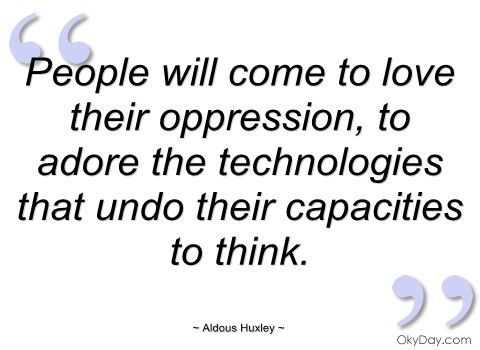
It's so reassuring that we have such compassionate & caring people leading the charge into the Brave New World of an AI driven society looking out for the best interests of Humanity. 🙄
RE
#27
Tech is always to the rescue / The big AI revolution
Last post by K-Dog - Oct 03, 2026, 11:08 AMDamn, music to code by 😀
#28
War / US and Israel carrying out str...
Last post by RE - Oct 03, 2026, 10:33 AMSame reason the FSoA hasn't gone bankrupt yet. Unlimited credit.
The Saudis are sending 100,000 Grunts to take the coast back from the Houthis. That's a mighty big molehill.
RE
The Saudis are sending 100,000 Grunts to take the coast back from the Houthis. That's a mighty big molehill.
RE
#29
Tech is always to the rescue / The big AI revolution
Last post by RE - Oct 03, 2026, 10:29 AMQuote from: TDoS on Oct 03, 2026, 07:47 AMI have no evil intent.
It's not Intentional, it's Inbred.
RE
#30
Tech is always to the rescue / The big AI revolution
Last post by K-Dog - Oct 03, 2026, 09:05 AMQuote from: TDoS on Oct 03, 2026, 07:47 AMAs for Surly, I pay no attention to your front page.
There you go, I really don't have to argue with you, you trip over yourself all the time. Really, all I have to do is wait.
THIS PAGE, look at the top of this pay and refresh a few times. There are only a few banners in rotation, 4 or 5. And you have watched this page load at least 100 times.
So it appears you are a robot who just busted yourself. No tokens for you.
Good to know! You are not real.

'Things may get ugly': Meta's new AI Muse is about to make the internet more annoying
Meta’s new AI agent Muse aims to automate daily tasks but may overwhelm digital systems through unchecked activity, disrupting businesses, exhausting resources, and exploiting users via flawed security and hidden data practices. With no regulatory framework in place, its unchecked autonomy threatens privacy, fuels competition for limited goods, and leaves society unprepared for an internet dominated by autonomous machines.
NOTE TO ALL READERS, DO NOT USE THESE THINGS. They are 50% spyware and 50% code and they may be altogether too good at spending your money for you.
I am writing one from scratch without any spyware and the process involves reverse engineering a few agent codebases. It will of course run on the video cards only. No data centers. I have been crunching on the code for days.
And oh my stars what I have seen.
* As an FYI feature I will track input and output token count and 'charge' myself at the lowest going rate. ($2 for a million input and $12 for a million output tokens.) Then on the Open Paw agent dashboard I will be able to see the money I am not having to pay our royal born tech overlords.