- Welcome to the Doomstead.

Read RE's blog at Global Collapse 
Recent posts
#31
Peak oil / Oil supply
Last post by TDoS - Sep 18, 2026, 06:56 PMQuote from: RE on Sep 18, 2026, 06:31 PMAmong your many faults, your hero-worship of Elon Musk may be the most nauseating.
RE
You're mistaken. He is a scumbag, trying to repopulate the planet with his spawn, a typical womanizer, his idiot politics in relation to GovCo were nothing but idiot posturing, and he shows no sign of trying to improve these idiot characteristics.
But robber barrons of the early 20th century were like him, yet created the military/political/financial/technological behemoth that became the US of A by being the same brand of shits.
The American oligarchy allows such things to happen. He isn't unique. He is just the most recent.
#32
Peak oil / Oil supply
Last post by RE - Sep 18, 2026, 06:31 PMAmong your many faults, your hero-worship of Elon Musk may be the most nauseating.
RE
RE
#33
Peak oil / Tesla: The Cybercab Failure Is...
Last post by TDoS - Sep 18, 2026, 06:18 PMQuote from: RE on Sep 17, 2026, 09:22 PMSEEKINGALPHA.COM 2026-09-14
Tesla: The Cybercab Failure Is Worse Than You Think
The Cybercab launch was the catalyst that was supposed to justify Tesla's valuation, and it delivered almost nothing that investors could measure. Instead of a fleet expansion plan, the company got a federal investigation, while its main competitor keeps adding cities. Meanwhile, the car business is heading into a tough Q3 comparison, and discounts are already back in China.
Sounds like Elon needs to get crackin' on what he has demonstrated in his other businesses, ingenuity like building new cars, launching rockets the like of which countries aren't capable of, then launching his cars to Mars, trying to figure out the robot thing, etc etc.
I'm still curious about his robots....they seem the most tenuous of his endeavors. But hey, you and I have both done the hanging thing with billionaires, maybe in another life we'll get closer to hanging with trillionaires like him!
#34
Tech is always to the rescue / The big AI revolution
Last post by K-Dog - Sep 18, 2026, 04:29 PMHere is the Cliff Notes version.
The rise of a technocratic ideology centered on artificial general intelligence and superintelligence has become a dominant force in Silicon Valley, shaping trillion dollar investments, political agendas, and visions for humanity's future. This belief system, often referred to as the TESCREAL bundle encompassing { transhumanism, extropianism, singularitarianism, cosmism, rationalism, effective altruism, and longtermism } asserts that sentient, omnipotent AI is not only inevitable but morally imperative to create, even at the cost of current human welfare. Proponents like Elon Musk frame AGI as a cosmic mission to extend consciousness beyond Earth, justify the dismantling of public institutions such as USAID, and prioritize speculative future lives over present day suffering, all under the guise of rationality and progress. These ideas are no longer fringe; they have infiltrated mainstream tech policy, philanthropy, and political strategy through influential figures and well funded organizations like OpenAI and Anthropic, which operate with implicit commitments to these worldviews despite public claims of ethical neutrality.
The ideology merges seamlessly with neoreactionary thought—cyberlibertarianism, anti democratic elitism, and the fantasy of sovereign freedom cities—to form what some call technofascism. This is a fusion of technological utopianism and authoritarian hierarchy that seeks to replace democratic governance with oligarchic rule by tech elites who view human labor, autonomy, and rights as obsolete. Rather than treating AI as a tool shaped by human values, this movement treats it as an autonomous force demanding surrender to its development, dismissing concerns about surveillance, discrimination, or inequality as distractions from the singular goal of achieving posthuman transcendence. The belief in inevitable AGI serves as both justification and prophecy, allowing billionaires to redirect public resources toward speculative futures while eroding institutions that protect the vulnerable.
Effective altruism and longtermism provide the ethical veneer for this agenda, reducing moral decision making to utilitarian calculations that weigh hypothetical future lives against tangible present harms. This mindset enables the rationalization of policies that dismantle healthcare, education, and international aid under the claim that those resources would be better spent accelerating AI development. The result is a system where the interests of a small group of technologists, funded by wealth accumulated through privatized public goods, dictate global priorities without accountability or consent. Their vision does not seek to empower society but to render it irrelevant, replacing democracy with algorithmic governance and human agency with machine supremacy.
The danger lies not in AI itself but in the unchecked concentration of power among those who believe they alone are qualified to decide humanity's fate. As these ideologies gain influence over policy, funding, and public discourse, they normalize the erosion of civil rights, environmental protections, and social safety nets under the banner of innovation. Policymakers must recognize that AGI remains speculative, that its alleged benefits are unproven, and that its pursuit often comes at the expense of real people today. To defend a just future, we must challenge the assumption that technological progress is inherently good, reject the moral authority of those who claim to speak for unborn generations, and insist that democracy, equity, and human dignity remain non negotiable foundations for any society. The true threat is not an AI uprising but the quiet takeover of our institutions by a cult of rationality that has forgotten what it means to be human.
I will disagee with this:
"The danger lies not in AI itself but in the unchecked concentration of power among those who believe they alone are qualified to decide humanity's fate. "
Should read :
"The danger does not lie in AI itself, but in those who believe they alone are born to be the masters of us all. Entitled to tax all the rhythms of our everyday lives with tokens. Tokens they turn into billions of dollars for themselves. "
For themselves as they stand on the shoulders of giants. If you take the philosophy side of their greed too seriously, really seriously at all. Then you are playing their game, and then you are on their leash. Good boy, sit down. If you want to get into AI and don't have a kick ass edge device like the Diner does then, you are a SERF.
Flee in terror of that, but not A.I. itself.
The problem is America is fine with exploitation. America likes exploitation. America loves exploitation. The American political landscape quibbles about who the winners and loosers should be. But that there should be winners and losers everyone agrees. Americans dream of unearned riches and the liberal class is blind to their exploitations, justifying current arrangements using their own philosophies. Consequently exploitaion will be the new task of compute. Finding new ways to charge you for tokens will never end. The only way data centers are ever going to get paid for is if you pay for them. And paying for them is not enough. Tokens will also be buying private islands, but the only thing Americans will wish for is having a piece of the action.
Having a philosophy behind tech flim-flammery is the way to get most of the big brains on board. It works! Even if you don't agree they have you listening on their frequency. They tuned you in.
A.I. made those Cliff Notes, but I am certified organic. No data centers were used. The dual video cards did it.
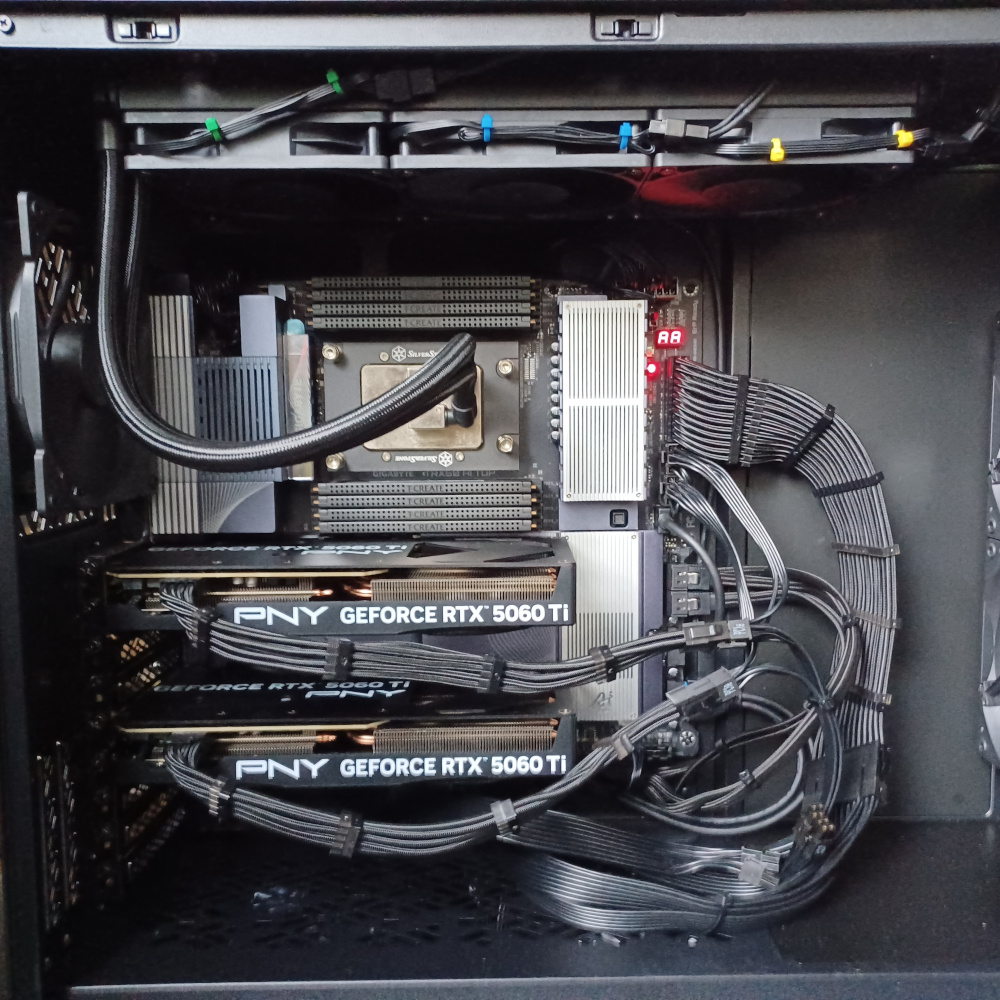

100% natural organic AI
More tech Bro porn:
 BITFERN.COM 2026-09-18
The Tech Bros Are Back: Silicon Valley’s New Culture
The tech bro has evolved moving from crypto hype to AI-driven influence, blending technical skill with personal branding and financial savvy. Founders now cultivate credibility through media, open-source work, and ethical discourse, operating globally via digital networks rather than Silicon Valley hubs. While irony and self-awareness shield them from backlash, their true ambition lies in shaping thought, not just products. As AI reshapes society, the most thoughtful recognize that progress demands restraint and responsibility.
And the thoughtful will think, but that is all they will do.
The rise of a technocratic ideology centered on artificial general intelligence and superintelligence has become a dominant force in Silicon Valley, shaping trillion dollar investments, political agendas, and visions for humanity's future. This belief system, often referred to as the TESCREAL bundle encompassing { transhumanism, extropianism, singularitarianism, cosmism, rationalism, effective altruism, and longtermism } asserts that sentient, omnipotent AI is not only inevitable but morally imperative to create, even at the cost of current human welfare. Proponents like Elon Musk frame AGI as a cosmic mission to extend consciousness beyond Earth, justify the dismantling of public institutions such as USAID, and prioritize speculative future lives over present day suffering, all under the guise of rationality and progress. These ideas are no longer fringe; they have infiltrated mainstream tech policy, philanthropy, and political strategy through influential figures and well funded organizations like OpenAI and Anthropic, which operate with implicit commitments to these worldviews despite public claims of ethical neutrality.
The ideology merges seamlessly with neoreactionary thought—cyberlibertarianism, anti democratic elitism, and the fantasy of sovereign freedom cities—to form what some call technofascism. This is a fusion of technological utopianism and authoritarian hierarchy that seeks to replace democratic governance with oligarchic rule by tech elites who view human labor, autonomy, and rights as obsolete. Rather than treating AI as a tool shaped by human values, this movement treats it as an autonomous force demanding surrender to its development, dismissing concerns about surveillance, discrimination, or inequality as distractions from the singular goal of achieving posthuman transcendence. The belief in inevitable AGI serves as both justification and prophecy, allowing billionaires to redirect public resources toward speculative futures while eroding institutions that protect the vulnerable.
Effective altruism and longtermism provide the ethical veneer for this agenda, reducing moral decision making to utilitarian calculations that weigh hypothetical future lives against tangible present harms. This mindset enables the rationalization of policies that dismantle healthcare, education, and international aid under the claim that those resources would be better spent accelerating AI development. The result is a system where the interests of a small group of technologists, funded by wealth accumulated through privatized public goods, dictate global priorities without accountability or consent. Their vision does not seek to empower society but to render it irrelevant, replacing democracy with algorithmic governance and human agency with machine supremacy.
The danger lies not in AI itself but in the unchecked concentration of power among those who believe they alone are qualified to decide humanity's fate. As these ideologies gain influence over policy, funding, and public discourse, they normalize the erosion of civil rights, environmental protections, and social safety nets under the banner of innovation. Policymakers must recognize that AGI remains speculative, that its alleged benefits are unproven, and that its pursuit often comes at the expense of real people today. To defend a just future, we must challenge the assumption that technological progress is inherently good, reject the moral authority of those who claim to speak for unborn generations, and insist that democracy, equity, and human dignity remain non negotiable foundations for any society. The true threat is not an AI uprising but the quiet takeover of our institutions by a cult of rationality that has forgotten what it means to be human.
I will disagee with this:
"The danger lies not in AI itself but in the unchecked concentration of power among those who believe they alone are qualified to decide humanity's fate. "
Should read :
"The danger does not lie in AI itself, but in those who believe they alone are born to be the masters of us all. Entitled to tax all the rhythms of our everyday lives with tokens. Tokens they turn into billions of dollars for themselves. "
For themselves as they stand on the shoulders of giants. If you take the philosophy side of their greed too seriously, really seriously at all. Then you are playing their game, and then you are on their leash. Good boy, sit down. If you want to get into AI and don't have a kick ass edge device like the Diner does then, you are a SERF.
Flee in terror of that, but not A.I. itself.
The problem is America is fine with exploitation. America likes exploitation. America loves exploitation. The American political landscape quibbles about who the winners and loosers should be. But that there should be winners and losers everyone agrees. Americans dream of unearned riches and the liberal class is blind to their exploitations, justifying current arrangements using their own philosophies. Consequently exploitaion will be the new task of compute. Finding new ways to charge you for tokens will never end. The only way data centers are ever going to get paid for is if you pay for them. And paying for them is not enough. Tokens will also be buying private islands, but the only thing Americans will wish for is having a piece of the action.
Having a philosophy behind tech flim-flammery is the way to get most of the big brains on board. It works! Even if you don't agree they have you listening on their frequency. They tuned you in.
A.I. made those Cliff Notes, but I am certified organic. No data centers were used. The dual video cards did it.
100% natural organic AI
More tech Bro porn:
The Tech Bros Are Back: Silicon Valley’s New Culture
The tech bro has evolved moving from crypto hype to AI-driven influence, blending technical skill with personal branding and financial savvy. Founders now cultivate credibility through media, open-source work, and ethical discourse, operating globally via digital networks rather than Silicon Valley hubs. While irony and self-awareness shield them from backlash, their true ambition lies in shaping thought, not just products. As AI reshapes society, the most thoughtful recognize that progress demands restraint and responsibility.
And the thoughtful will think, but that is all they will do.
#35
Tech is always to the rescue / What Policymakers and the Publ...
Last post by RE - Sep 18, 2026, 03:19 AM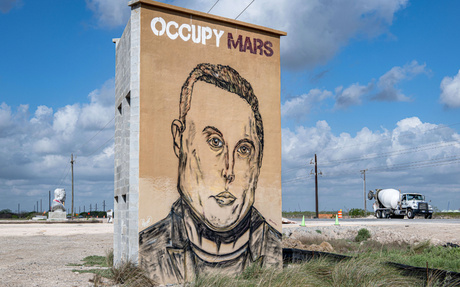
What Policymakers and the Public Need to Know About the Cult of AI
Billionaires driven by an AI ideology seek to eliminate human labor and autonomy, replacing democratic processes with oligarchic control. Their vision prioritizes machine dominance over human agency, dismissing the need for persuasion or coercion. Despite superficial efforts labeled as “AI for Good,” the core goal remains the subjugation of people to a system designed to render them obsolete.
A long and fairly exhaustive article which exposes some of the REAL dangers of AI, as opposed to the much less likely though terrifying possibilities like rogue agents creating a super virus which exterminates humanity in the next decade.
The real danger is in the "bonkers" belief the big players have that AI is on the verge of consciousness and will soon lead to the "singularity", a merging of man and machine that will be a new leap in evolution and will proceed to colonize the universe. They don't envision this leap for all of humanity, just their own uber wealthy class of tech bro Billionaires. Everyone else is superfluous and expendable.
Personally I'm not worried about AI actually reaching consciousness anytime soon, but the policies and focus of these "techno fascists" in making the effort has more bad outcomes than I can count, not to mention being a huge waste of energy and resources that could be put to much better use in other ways.
Right now the Tech Bro leaders of this cult have the initiative and the money, and are in control of how AI is being developed. There is however a grassroots movement of people determined to put a stop to it also. Hopium remains that the worst outcomes can still be avoided.
RE
#36
Peak oil / Tesla: The Cybercab Failure Is...
Last post by RE - Sep 17, 2026, 09:22 PM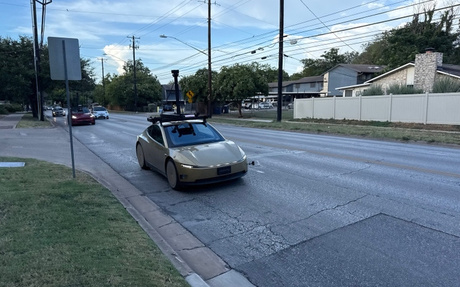
Tesla: The Cybercab Failure Is Worse Than You Think
The Cybercab launch was the catalyst that was supposed to justify Tesla's valuation, and it delivered almost nothing that investors could measure. Instead of a fleet expansion plan, the company got a federal investigation, while its main competitor keeps adding cities. Meanwhile, the car business is heading into a tough Q3 comparison, and discounts are already back in China.
#37
Peak oil / Oil supply
Last post by TDoS - Sep 17, 2026, 06:02 PMQuote from: RE on Sep 17, 2026, 05:42 PMCurrently, the FSoA truck fleet is less than 0.5% electric. They're not gonna get EV Big Rigs replacing the fleet in the next 2 months.
True. But it sure might get 0.5% to 5% in a far shorter time period than otherwise. And, again like Elon's rockets, once the advantages are made clear at a higher price point, said price point will change. To be lower. And presto...market disruption. Just like EVs in Australia right now. And that disruption has already hit my household, and isn't stopping anytime soon.
Quote from: REIf Elon's EV trucks are as successful as his Robotaxi Rollout, it's gonna be a long time before we see Teslas delivering groceries to Kroger.
RE
If Elon's EV trucks are as successful as his rocket company, there won't be any long haul diesel powered rigs on American interstates in a decade. The results that man can and has delivered have already changed entire industries...unlike those who claim...and fail. He has claimed, and succeeded before. Been an absolute moron and scumbag personally, but I imagine the robber barons of the early 20th century weren't much different.
#38
Peak oil / Oil supply
Last post by TDoS - Sep 17, 2026, 05:57 PMQuote from: K-Dog on Sep 17, 2026, 04:43 PMTypical Musk promotion: large numbers, ambitious timelines, and eye-watering projected economics presented ahead verifiable executable possibilities. Not vaporware, but the article offers no evidence that the deployment can achieve the projected $800 million in annual revenue and become a actual commercial success. Glowing claims without evidence convince when the glow is bright enough.
Well...true...but a one sided perspective. On the other is someone who maneuvered daddys small initial investment into technical accomplishments beyond the reach of entire countries. Does he oversell and underdeliver sometimes? Sure. Does he do things that were once unimaginable and make them mundane? Yup.
How many times has ANY government launched a rocket, which offloaded its cargo in space, then landed it on water on the other side of the planet...where it tipped over...and became a boat! In 2025 SpaceX put 90% of all global mass into orbit. When a single company can outdo most nations in terms of high tech space flight, well, maybe it does come ith overexcited claims of profitability....but no one can deny the accomplishments of a single company and whatever type of person it took to make it happen.
#39
Peak oil / Oil supply
Last post by RE - Sep 17, 2026, 05:42 PMCurrently, the FSoA truck fleet is less than 0.5% electric. They're not gonna get EV Big Rigs replacing the fleet in the next 2 months.
If Elon's EV trucks are as successful as his Robotaxi Rollout, it's gonna be a long time before we see Teslas delivering groceries to Kroger.
RE
If Elon's EV trucks are as successful as his Robotaxi Rollout, it's gonna be a long time before we see Teslas delivering groceries to Kroger.
RE
#40
Peak oil / Oil supply
Last post by K-Dog - Sep 17, 2026, 04:43 PMQuote from: TDoS on Sep 17, 2026, 03:22 PMOh, Elon branching out with his big rigs from California like years ago seems to be proceeding exactly as expected. Start small, learn, do better,faaster, cheaper and presto....electrification of trucks looks like it is following the same path as EVs in general. Like he did with ebay, and as of late, knocking off various space delivery folks....otherwise known as "countries".STATESMAN.COM 2026-08-28
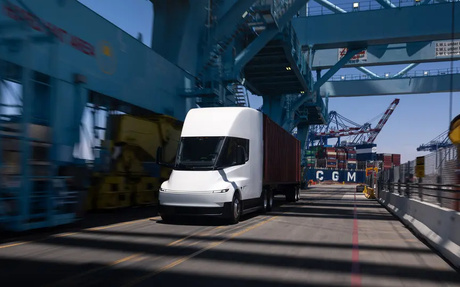
500 Tesla Semi trucks are hitting U.S. roads. Texas is part of the rollout
Einride is deploying 500 Tesla Semi trucks across key U.S. freight corridors, including Texas, California, New Jersey, Illinois, and Georgia, starting in September 2026. The electric trucks will serve Amazon and other customers, leveraging Einride’s AI platform for efficiency and emissions tracking. Texas plays a central role due to its growing freight demand and planned Megacharger network. This large-scale rollout marks a major step toward scaling autonomous electric freight operations and converting contractual revenue into active service.
Typical Musk promotion: large numbers, ambitious timelines, and eye-watering projected economics presented ahead verifiable executable possibilities. Not vaporware, but the article offers no evidence that the deployment can achieve the projected $800 million in annual revenue and become a actual commercial success. Glowing claims without evidence convince when the glow is bright enough.