


Why the US Navy won't blast the Iranians and 'open' Strait of Hormuz
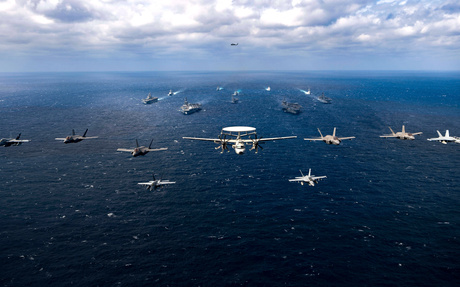
The days of omnipotent U.S. sea power as a power projection instrument close to well defended shorelines are coming to an end. This change raises questions about the future of navies and the wisdom of investment in these extremely expensive instruments of national power.
A brief review of American naval history shows how this shift came about, and casts doubt on whether Washington is ready for the future of naval war.
One of the main problems with military strategists is they often build their armies based on their experience in the last war. This leads to building systems easily defeated or circumvented by new technologies or strategies. The Maginot Line is the classic example, built based on the experience of WWI, it was vulnerable to the "Blitzkrieg" strategy pursued by the Nazis in WWII.
The same is now true for the Carrier Group, the very expensive flagship of FSoA Naval Power which has been used to dominate the world militarily since WWII. Those days are over, which some military strategists realize, but dimwits like Trumpolini and most Repugnant War Hawks don't yet grasp.
I have explained many times in the past why the Normandy style invasion of WWII could never be pulled off today by either the FSoA, China or Russia, the 3 biggest military powers. Ships at sea are simply too slow moving and vulnerable to much cheaper ballistic & cruise missiles and unmanned drones. A ship full of grunts heading for some beach is much more likely to have Davey Jones Locker as its final destination than a beachhead.
This is a big playing field leveler for poorer, less technologically advanced countries, and the effectiveness of war to achieve political or economic control over other countries has become vastly diminished. Perhaps this reality will be grasped in the aftermath of this war.
As it stands, we look to be moving into a period of economic siege warfare, where the side that can last longest under deprivations of war is most likely to win. Winning here is a relative term though, since both sides are economically damaged by the war. It's not even a Zero Sum Game, it's negative for everyone. It will be a very expensive lesson for those who advocate for war to solve political and economic conflict.
RE